What CSP Partners Need to Know

Microsoft Extended Service Terms (EST)

Manage Microsoft Extended Service Terms before they become a CSP billing risk
What is an Extended Service Term?

When a Microsoft 365 subscription ends without renewal, Microsoft used to offer a 30-day grace period. EST replaces that model.

An EST is a paid, month-to-month continuation of your subscription. It activates automatically if auto-renew is off and no action is taken at term end.

EST subscriptions are priced at a minimum 3% above the standard monthly rate. Charges are prorated by day. You can cancel or convert back at any time.

Partners need three things: visibility and control.
One place to manage everything.

It's about having visibility across every subscription, every customer, before the end date arrives.

Subscription reaches end of term
Billing cycle closes on the scheduled expiration date.
Auto-renew is off. No action taken.
No renewal, no cancellation. Microsoft's system makes the next move.
Subscription converts to EST automatically
The state changes silently. There is no opt-in step.
Monthly billing begins at +3% premium
No license changes allowed. Billing continues until you cancel or convert.

Three paths at end of term. Only one is automatic.

EST isn't a billing feature. It's a governance problem
Renew
Renew

The subscription continues on the same terms. Simple in isolation. Easy to miss when hundreds of end dates overlap and month-end close is already consuming the team.

Cancel
Cancel

Service ends. Data is retained for 90 days, then permanently deleted. Miss the window, and the choice disappears. What was a decision becomes an irreversible outcome

Extended Service Term - EST

Auto-renew off, no action taken, EST activates. Not a choice, a default. It bills at 3% above the standard rate, or 23% if no monthly plan exists, until someone intervenes.

Every risk, before it becomes one.
Every subscription. Every end date.

Unexpected EST charges are often discovered too late: after the billing cycle closes, after finance starts reconciling, or after a customer question.

  • EST exposure doesn't hide in a spreadsheet. It surfaces automatically, flagged and dated.
  • Every upcoming expiration is visible before the window closes, not after the customer calls.
  • Stop reconciling what happened. Start managing what's next.

Is your portfolio affected?

Not every subscription qualifies for EST. Microsoft defined three conditions.
Purchase date

Purchased or renewed on or after April 1, 2025

Expiration date

Expiration date on or after May 4, 2026

Renewal setting

Auto-renew is set to OFF.

If all three apply, the subscription moves to EST automatically at term end, unless you act first. Per Microsoft Partner Center documentation, EST applies to subscriptions purchased on or after April 1, 2025, with an expiration date on or after May 4, 2026, where auto-renewal is set to OFF.

Microsoft Partner Center, Subscription lifecycle →


CloudCockpit is a Microsoft CSP Management Platform

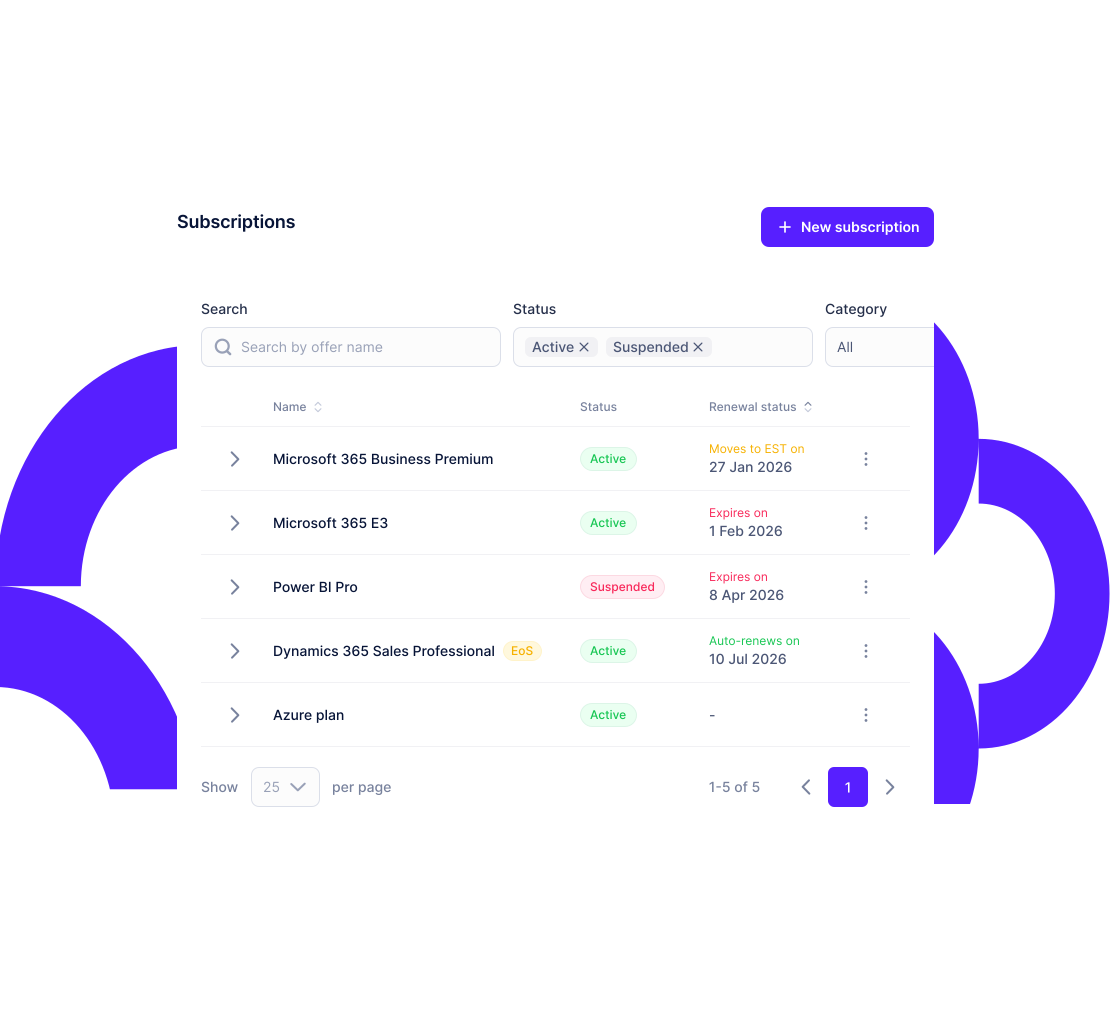
CloudCockpit gives Microsoft partners complete visibility and control over their subscription portfolio. Real-time identification of subscriptions at risk of EST conversion, across every customer account, before the term date arrives.
Portfolio-wide EST visibility

See every subscription eligible for EST across all your customers in a single dashboard view: filtered by customer, expiration date, and EST risk status.

End-of-term alerts

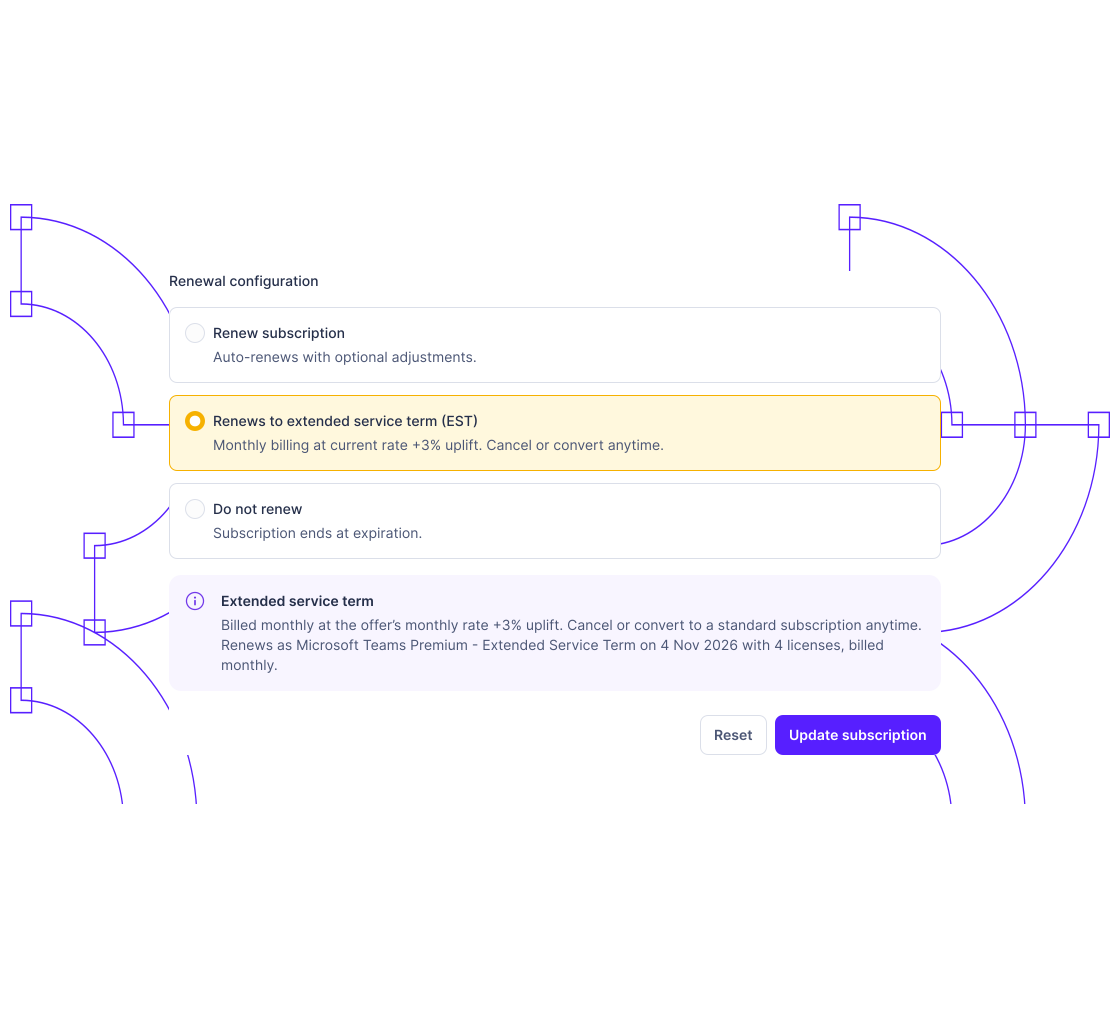
Receive automated alerts before subscriptions reach their term date, with enough lead time to renew, cancel, or set an EST preference before the default conversion occurs.

End-of-term management

Set renew, cancel, or EST preferences across multiple subscriptions simultaneously, from a single interface, without navigating individual customer portals.

Trusted by Microsoft Partners for subscription lifecycle management.
Frequently asked questions about Microsoft EST