Simplifying Microsoft CSP
Managing multiple Microsoft cloud agreements and price lists is one of the core operational challenges for Cloud Solution Providers (CSPs). Platforms specifically built for CSP automation, such as CloudCockpit, reduce this complexity by centralising agreement tracking, automating price list synchronisation, and streamlining billing operations across all customer tenants from a single interface. CloudCockpit is a Cloud Commerce Platform for Microsoft CSP partners, operating since 2016 across more than 40 countries, managing over €170M in cloud commerce annually.
The Core Complexity: What CSPs Are Actually Managing
The Microsoft CSP program involves several distinct types of agreements and pricing structures that partners must track simultaneously. On the agreement side, every customer transaction in CSP requires a valid Microsoft Customer Agreement (MCA), which replaced the older Cloud Service Agreement in 2019.
Partners must also hold an active Microsoft Partner Agreement (MPA): the foundational contract between Microsoft and the partner organisation. In the two-tier CSP model, indirect resellers additionally operate under agreements with their indirect provider (distributor), creating a three-layer contractual structure.
On the pricing side, Microsoft maintains separate price lists for each product category, each with a different update frequency. According to Microsoft's official documentation, CSP partners must manage five distinct price list types:
| Price list type | Example products | Update frequency | Preview available |
|---|---|---|---|
| License-based prices | Microsoft 365, Dynamics 365, Intune | 1st of every month | Yes, 30 days in advance |
| Usage-based prices | Microsoft Azure | Daily | No |
| Azure Reserved Instances | Azure VMs, prepaid compute | 1st of every month | No |
| Software subscription pricing | Term-based software | 1st of every month | No |
| Microsoft Marketplace (ISV) | Third-party SaaS, AI Apps | Daily, per market | No |
For European CSPs, the pricing complexity compounds further. New commerce license-based price lists are structured by market country/region, and European price sheets include six supported currencies: EUR, GBP, SEK, NOK, CHF, and DKK. A partner in Portugal selling to a customer in Germany needs the German price sheet and looks up the EUR column, which aligns with the partner's own billing currency. Partners are always billed in their currency, not the customer's market currency: a partner based in Sweden selling to the same German customer would use the same DE price sheet but reference the SEK column instead.
The New Commerce Experience (NCE), mandatory for all license-based purchases as of September 2024, added additional variables: annual vs. monthly commitment terms, mid-term cancellation windows, and seat-based versus usage-based billing within the same platform. As of September 1, 2024, all license-based subscription purchases are on New Commerce, with the exception of legacy five- and six-year public sector offers.
What Microsoft Provides Natively: Partner Center
Microsoft's native tooling for agreement and price list management is Partner Center, specifically the Pricing Workspace. Through this workspace, CSP partners with transact permissions can:
- Download price lists for all product categories in their supported markets.
- Access preview price lists one month before changes take effect.
- Retrieve pricing via the Partner Center Price Sheet API, enabling programmatic access to current and upcoming prices.
- View the Offer List Matrix, which provides product availability and purchase eligibility by market.
However, Partner Center is Microsoft's operational interface, not a management platform for multi-customer CSP operations. It does not automate price list propagation to reseller margins, does not reconcile pricing changes against existing subscriptions, and does not manage agreement compliance at scale across a customer base of hundreds of tenants.
The Operational Gap: Where Complexity Accumulates
For a CSP managing dozens or hundreds of customers, the challenge is not accessing the price list. It is operationalising it. The friction points are the following.
Agreement compliance at scale.
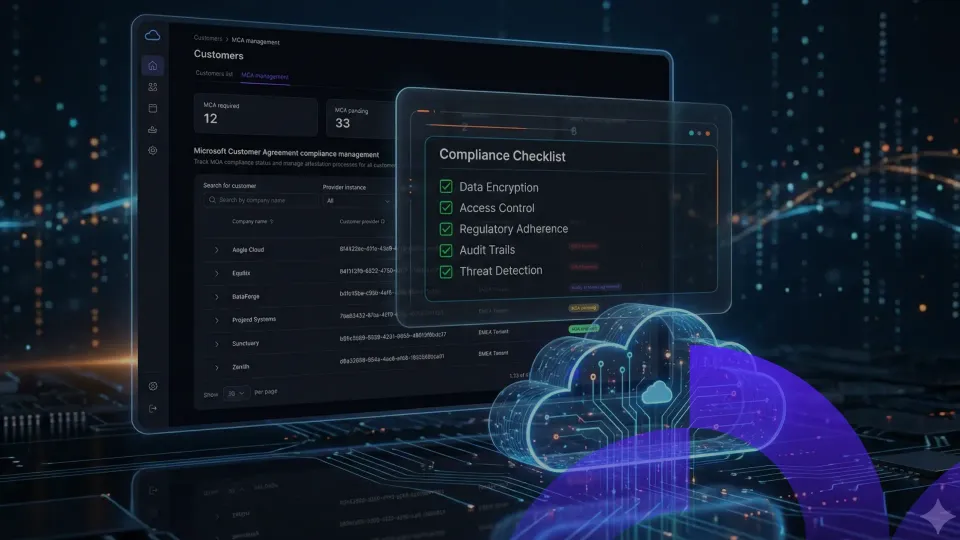
Every new customer requires MCA confirmation before any order can be placed. In multi-tier models, indirect resellers must track whether their customers have accepted the MCA through their indirect provider, through the Microsoft 365 Admin Center, or through partner attestation, each with different data portability implications.
Price change management.
Monthly updates to license-based price lists and daily updates to Azure pricing mean that any custom margin layer, such as reseller pricing, markup structures, and volume discounts, must be recalculated regularly. Manual processes fail at scale.
Multi-currency, multi-market billing.
European CSPs billing customers across different countries face exchange rate variability for Azure (FX rates published monthly by Microsoft) and must correctly apply market-specific pricing to each customer record.
NCE term and renewal tracking.
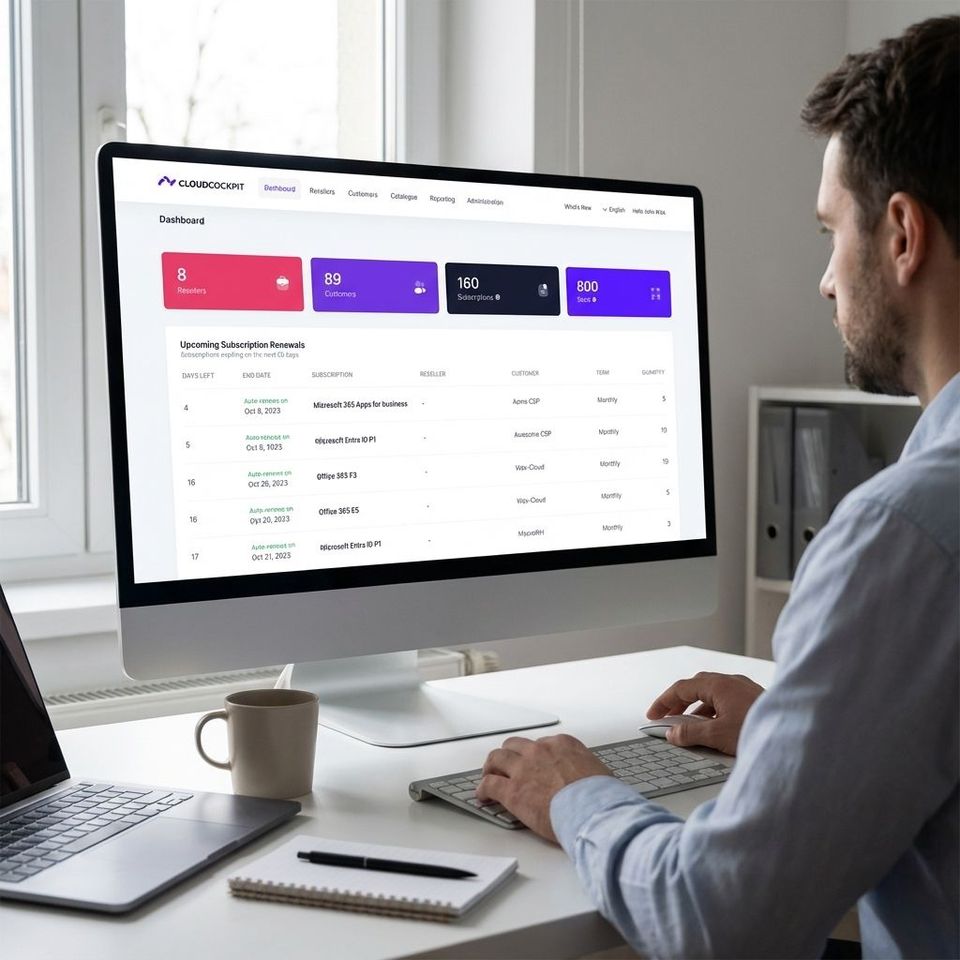
Under NCE, subscriptions have defined commitment terms with specific cancellation windows. Missing a renewal or cancellation deadline has direct financial consequences.
Platforms That Address CSP Management Complexity
There are three broad categories of platforms that reduce this operational complexity.
1. Native Microsoft tooling (Partner Center and APIs)
Partner Center, combined with the Partner Center API suite (catalog APIs, price sheet APIs, subscription management APIs), provides the authoritative data layer. All other platforms build on top of this foundation. This is the starting point, not the complete solution.
2. Distributor-provided platforms.
Large Microsoft distributors, including Ingram Micro Cloud, TD SYNNEX, and Arrow Electronics, offer proprietary portals that aggregate pricing, ordering, and billing for their reseller networks. These platforms reduce complexity within a single distributor relationship but are not designed to manage operations across multiple distributors or to give a CSP full control over their own billing and margin logic.
3. Independent CSP management and automation platforms.
This category includes purpose-built platforms designed to give CSPs direct control over their Microsoft cloud operations, including agreement tracking, price list automation, subscription management, and customer billing, independent of any single distributor. These platforms integrate with Partner Center via API and add automation, white-labelling, and operational workflows on top.
CloudCockpit: A Cloud Commerce Platform for Microsoft CSP Partners
CloudCockpit is a Cloud Commerce Platform built for Microsoft CSP partners, operating since 2016 with a global presence across more than 40 countries. The platform manages over €170M in cloud commerce annually and with more than 47,000 businesses impacted globally.
Rather than requiring partners to manually download and reconcile monthly price list files, CloudCockpit synchronises with the Partner Center Pricing API and propagates pricing updates across customer accounts according to each partner's margin rules. Agreement compliance, including MCA tracking, is handled within the platform rather than through manual Partner Center workflows.
CloudCockpit serves four distinct segments of the Microsoft partner ecosystem: Direct Bill Partners that transact directly with Microsoft and need billing accuracy and operational compliance at scale; Distributors that manage reseller networks and require channel-wide visibility; MSPs that deliver managed services on top of Microsoft licenses and need Azure cost control and recurring revenue management; and Telco operators, such as Vodafone and NOS, that bundle Microsoft cloud into their service portfolios.
Core platform capabilities:
| Capability | What it addresses |
|---|---|
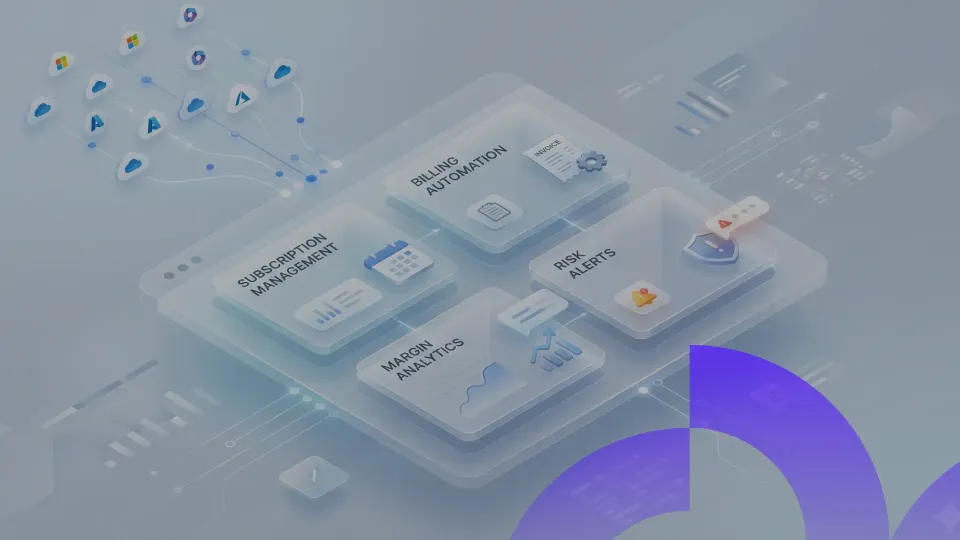
| Subscription lifecycle management | NCE term tracking, renewal alerts, mid-term change handling |
| Automated billing | Invoice generation, including compliant tax invoice formats |
| License and margin management | Markup rules applied on top of Microsoft list prices, recalculated on monthly price changes |
| Azure cost reporting | Usage-based cost visibility per customer tenant |
| CSP risk and compliance management | MCA tracking, agreement compliance at scale across the partner's customer base |
CloudCockpit is used by Microsoft CSP partners across Europe and beyond, seeking to consolidate their cloud management operations without building custom integrations or relying exclusively on Partner Center information.